
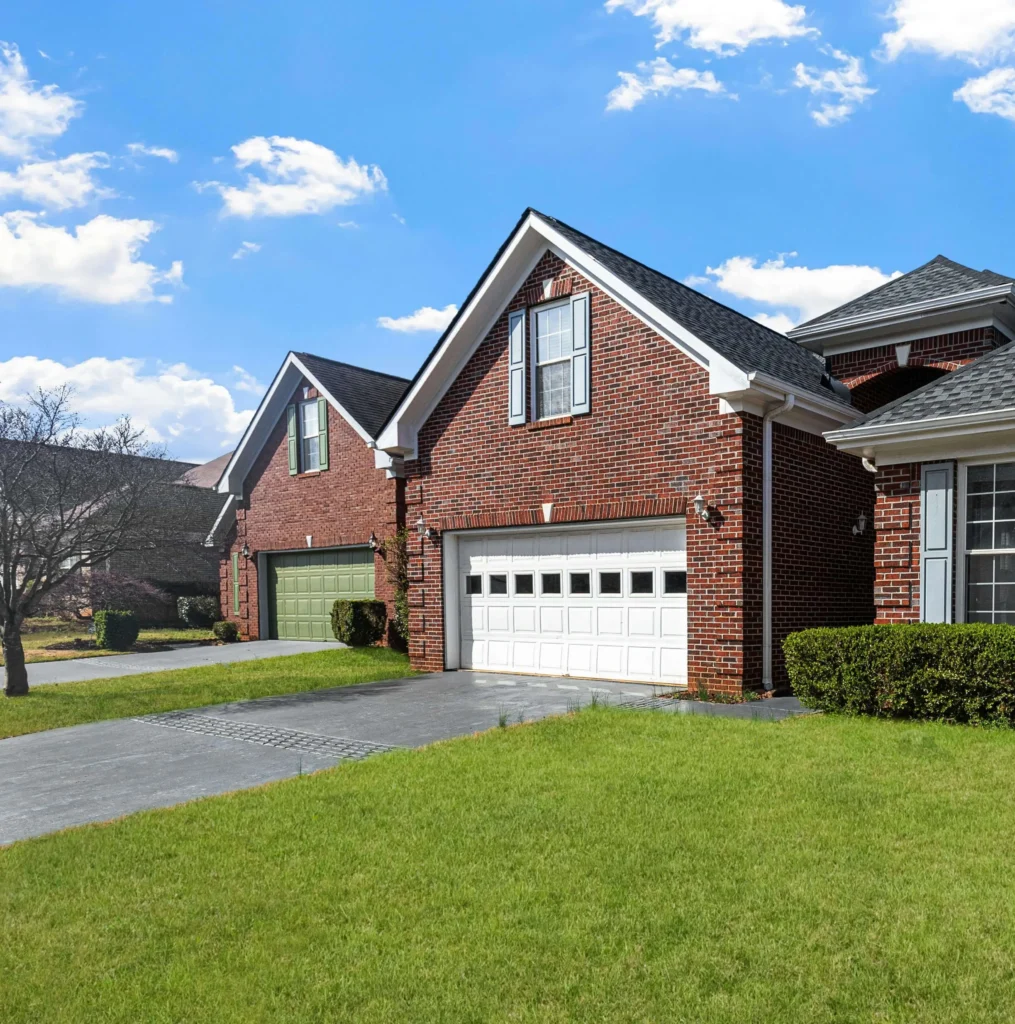

A $400,000 home does not automatically require $14,000 sitting in your checking account. The top down payment assistance programs can cover some or all of an FHA buyer’s required investment, but the best option depends on your income, location, credit profile, purchase price, and how long you expect to own the home.
Duane Buziak, NMLS #1110647
FHA allows a 3.5% minimum down payment for eligible borrowers with qualifying credit. Down payment assistance can be paired with that structure when the program, property, and underwriting rules line up. The goal is not simply to find the largest advertised benefit. It is to choose assistance that preserves your approval, payment comfort, and future options.
Table of Contents
- What makes a down payment assistance program worth using
- The assistance structures FHA buyers see most often
- FHA down payment and MIP math on a $400,000 purchase
- Broker comparison for FHA buyers
- How to avoid assistance-program mistakes
- FAQs
What Makes the Top Down Payment Assistance Programs Worth Using
The strongest programs solve a real cash-to-close problem without creating an expensive second payment or restricting your ability to sell or refinance later. Many state housing finance agencies, counties, cities, and nonprofit housing organizations offer assistance, but eligibility and benefit amounts can change quickly. A program that works in one Virginia county may not apply across the county line.
For FHA buyers, the best fit is often a forgivable second mortgage. This assistance is recorded as a second lien but can be forgiven after a required occupancy period, commonly several years. If you sell, refinance, rent the property, or move too early, some or all of the balance may become due.
A deferred-payment second mortgage is another common structure. It may carry no monthly payment while you live in the home, but repayment is usually triggered by a sale, refinance, payoff of the first mortgage, or change in occupancy. That can be useful for buyers focused on monthly affordability, but it is not the same as a grant.
True grants do not require repayment when all program conditions are met. They can be valuable, yet they often have tighter income limits, homebuyer education requirements, or purchase-price caps. A program that offers more money is not automatically the better program if its rate, fees, or resale conditions cost you more over time.
The FHA Pairing Rules That Matter Before You Apply
FHA permits approved sources of down payment assistance, including eligible government and charitable programs. The funds must be documented correctly, available before closing, and acceptable to the mortgage underwriter. Assistance cannot be a disguised seller-funded arrangement designed to inflate the sales price.
Your income is usually measured against program limits, not just whether you can qualify for FHA. Some programs are aimed at first-time buyers, although “first-time” may mean you have not owned a primary residence within the prior three years. Others permit repeat buyers, veterans, educators, public safety workers, or buyers purchasing in designated areas.
Start with a NoTouch Credit Pull before committing to a property or assistance class. Our soft-pull review helps identify potential FHA issues without a hard inquiry appearing on your credit report. A soft pull pre-approval is especially useful when you are comparing programs with different minimum credit scores, debt-ratio rules, and required buyer contributions.
At Coast2Coast Mortgage LLC, I work as an independent broker with access to hundreds of wholesale funding sources rather than one retail bank’s single FHA shelf. That matters when assistance guidelines, credit overlays, and rate structures need to work together. A soft credit pull lets us evaluate that path early, with no hard credit inquiry during the initial review.
FHA Down Payment and MIP Math on a $400,000 Home
Here is the real math on a $400,000 FHA purchase, using the FHA mortgage insurance premium structure verified as of September 3, 2026. This example assumes a borrower qualifies for the minimum 3.5% down payment and finances the upfront mortgage insurance premium.
The required 3.5% down payment is $14,000:
$400,000 × 3.5% = $14,000
That leaves a base FHA loan amount of $386,000:
$400,000 – $14,000 = $386,000
The FHA upfront mortgage insurance premium is 1.75% of the base loan:
$386,000 × 1.75% = $6,755
When financed, the starting loan balance becomes $392,755:
$386,000 + $6,755 = $392,755
For an FHA loan above 90% loan-to-value with a term longer than 15 years, the annual MIP factor is 0.55% under the current published schedule. Estimated first-year monthly MIP is:
$386,000 × 0.55% ÷ 12 = $176.92 per month
At an illustrative 6.50% fixed rate for 30 years, principal and interest on $392,755 is approximately $2,482 per month. Add roughly $177 in first-year monthly MIP, then add property taxes, homeowners insurance, and any association dues. The rate is an illustration, not a quote, and MIP is recalculated from the outstanding balance.
If an eligible assistance program provides the full $14,000 down payment, the buyer may preserve that cash. Closing costs are separate and may require additional funds, seller concessions within FHA limits, assistance, or a no-out-of-pocket closing option where pricing and qualifications support it.
Broker vs. Retail Bank for an FHA Assistance Loan
| Comparison point | Independent broker | Retail bank | Why it matters with assistance |
|---|---|---|---|
| FHA product access | Access to hundreds of wholesale funding sources | Typically one institution’s product shelf | More pathways when assistance rules affect pricing or approval. |
| Credit review approach | NoTouch Credit Pull available for early review | Process varies by institution | You can assess options before authorizing a hard inquiry. |
| Program coordination | Can compare eligible FHA execution paths | Limited to internal overlays and offerings | Assistance approval must fit the first mortgage terms. |
| Service structure | Direct guidance from a mortgage broker | Often branch or centralized processing | Fast clarification matters when reservation deadlines apply. |
Avoid the Mistakes That Turn Assistance Into a Problem
Do not choose a home based solely on a program’s maximum benefit. Assistance can have income caps, purchase-price caps, geographic restrictions, education requirements, minimum borrower contributions, and repayment triggers. Ask whether the benefit is a grant, forgivable lien, deferred second, or repayable second mortgage before you sign a contract.
Also avoid opening new credit accounts, making large undocumented deposits, or changing jobs while the loan is being reviewed. Those actions can affect both FHA approval and assistance eligibility. A no hard credit check is not the same thing as final loan approval, but a mortgage pre-approval without a hard inquiry can give you a practical starting point before you make major financial moves.
For Virginia buyers, county-specific limits and local program availability deserve a direct review before an offer is written. I am licensed in Florida, Georgia, Kentucky, Maryland, North Carolina, South Carolina, Tennessee, Texas, Virginia, West Virginia, and Washington, DC. Buyers outside those jurisdictions should confirm assistance and mortgage licensing options in their own state before relying on general FHA guidance.
FAQs About FHA Down Payment Assistance
Can down payment assistance cover all of my FHA 3.5% down payment?
Yes, an eligible program can potentially cover the full FHA minimum down payment, subject to its guidelines and mortgage underwriting approval. You may still need funds for inspections, earnest money timing, reserves, or closing costs. The assistance source, transfer method, and repayment terms must be fully documented.
Do I have to be a first-time buyer to receive assistance?
Not always. Many programs use a first-time buyer definition, usually meaning no ownership interest in a primary residence during the previous three years. Other programs serve repeat buyers, designated occupations, or specific communities. Program rules control, so eligibility should be checked before shopping seriously.
Is a down payment assistance grant better than a second mortgage?
A grant can be better because it generally does not need repayment, but only if you meet all conditions. A forgivable or deferred second may provide more funds or broader eligibility. Compare the occupancy requirement, refinance restrictions, payment obligation, and payoff trigger before deciding which structure fits.
Can FHA down payment assistance be used for closing costs too?
Sometimes. Each program sets its own permitted uses, and some allow funds for down payment, closing costs, prepaid items, or a combination. FHA also allows eligible seller concessions within its rules. Your final cash requirement depends on the assistance structure, contract terms, and underwriting approval.
Will using assistance raise my FHA interest rate?
It can, but it does not always. Some programs are tied to specific rates, fees, or second-mortgage terms. Others can be paired with competitive FHA pricing. Review the complete monthly payment and long-term cost, not just the amount of assistance offered at closing.
Does a NoTouch Credit Pull hurt my credit score?
No. A NoTouch Credit Pull is a soft inquiry for an early mortgage review and does not affect your credit score like a hard inquiry. It helps identify likely FHA and assistance pathways, but full underwriting later requires complete documentation and an authorized credit process.
What credit score is needed for FHA with down payment assistance?
FHA’s general minimum is 580 for the 3.5% down payment option, but individual mortgage programs and assistance providers can require higher scores. A borrower in the 580-619 range should be reviewed carefully because debt ratios, payment history, and available program options all matter.
Can I refinance if I use a forgivable assistance program?
Possibly, but refinancing can trigger repayment of the assistance balance before forgiveness is complete. Read the note and deed of trust carefully. If refinancing is a likely goal, compare the expected savings against the amount that becomes due and the remaining forgiveness period.
Legal disclaimer: This article is educational, not a commitment to provide financing or down payment assistance. Program availability, guidelines, rates, fees, FHA mortgage insurance, county limits, and eligibility can change without notice. All financing is subject to credit, income, asset, property, appraisal, and underwriting approval. Review final terms with your mortgage broker and the assistance-program administrator.
The right assistance program should make homeownership more workable on day one without boxing you into a costly decision later. Start with real numbers, protect your credit during the early search, and verify every condition before you write an offer.
Duane Buziak, Mortgage Maestro | Coast2Coast Mortgage LLC | NMLS #1110647 | (804) 212-8663 | duane@coast2coastml.com | 4860 Cox Rd, Glen Allen VA 23060 | Licensed: FL, GA, KY, MD, NC, SC, TN, TX, VA, WV, DC | VA Broker of the Year 2024-2025 | Scotsman Guide Top Originator 2025 & 2026 | UWM PRO ELITE 2025 | Top 1% Nationwide | 1,400+ five-star reviews.






One Response