


Your credit score is the single biggest lever you can pull before applying for an FHA loan. FHA guidelines allow approval with scores as low as 580 (for 3.5% down) or even 500–579 (for 10% down) — but a higher score unlocks better rates, lower long-term costs, and access to more lenders. The good news: the right tools can meaningfully accelerate your credit repair timeline.
This guide covers the best free and paid credit-building tools available in 2026, and how each one fits into your FHA mortgage strategy. Whether you’re 30 points away from the 580 threshold or pushing toward 620+ to qualify with a wider range of lenders, these tools give you a clear, actionable path forward.
One important note before we dive in: FHA loan limits for 2026 are $541,287 (floor) and $1,249,125 (ceiling) for a 1-unit property, per HUD Mortgagee Letter 2025-23, effective for case numbers assigned on or after January 1, 2026. Your credit score determines how you access these loans, not whether they exist for you.
1. AnnualCreditReport.com
Best for: Every FHA applicant — this is your mandatory first step before anything else.
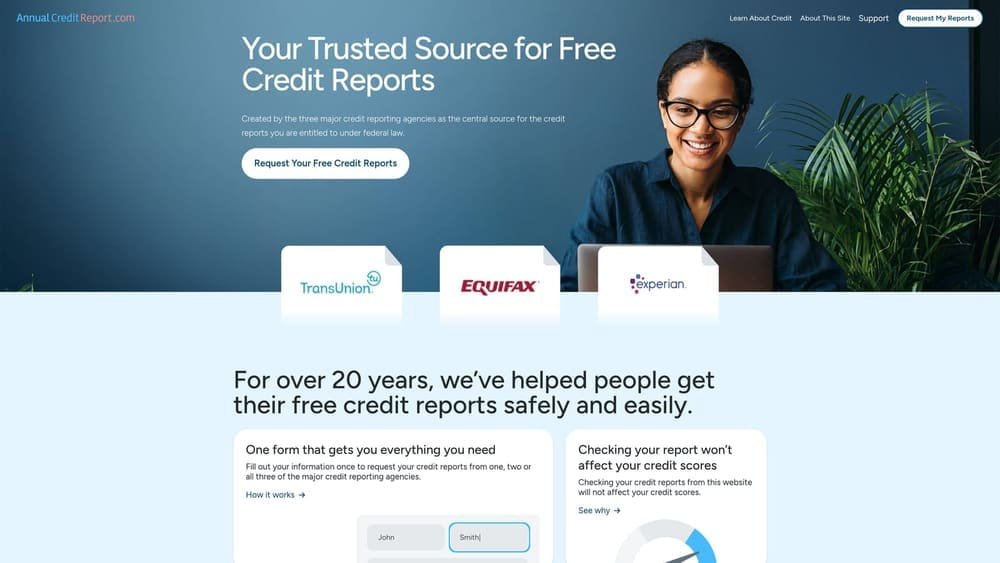
AnnualCreditReport.com is the federally mandated, FCRA-authorized source for free credit reports from all three major bureaus: Equifax, Experian, and TransUnion.
Where This Tool Shines
Before you use any credit-building tool, you need to know exactly what’s on your file. FHA lenders pull a tri-merge credit report that combines all three bureaus, and they use the middle score of the three (or the lower middle score for co-borrowers). If one bureau is showing an error, a collection account, or a derogatory mark that doesn’t belong to you, your middle score suffers — and you may not even know it.
AnnualCreditReport.com is the only site authorized under federal law to provide free reports from all three bureaus. Weekly free access is currently available — verify the current access frequency directly at the site before applying, as this can change. There are no upsells, no account creation required, and no subscription. This is purely your legal right as a consumer.
Key Features
Tri-Bureau Access: Pull reports from Equifax, Experian, and TransUnion in a single session — the same bureaus your FHA lender will review.
Error Identification: Spot inaccurate collections, incorrect account statuses, or fraudulent accounts before your lender does.
Dispute Links: Each report includes direct links to each bureau’s dispute process, so you can act immediately on anything you find.
No Hard Pull: Accessing your own report through this site does not affect your credit score in any way.
No Cost, No Account: Federally mandated under the Fair Credit Reporting Act — completely free with no subscription required.
Best For
Every single FHA applicant, without exception. This is not optional. If you haven’t pulled all three bureau reports in the last 30 days, do this before anything else. You cannot build a credit improvement strategy on data you haven’t seen.
Pricing
Free. Mandated under the Fair Credit Reporting Act (FCRA). No subscription, no upsell, no account creation required.
2. Experian Boost
Best for: Borrowers with thin credit files who pay utility, phone, or eligible streaming bills on time.
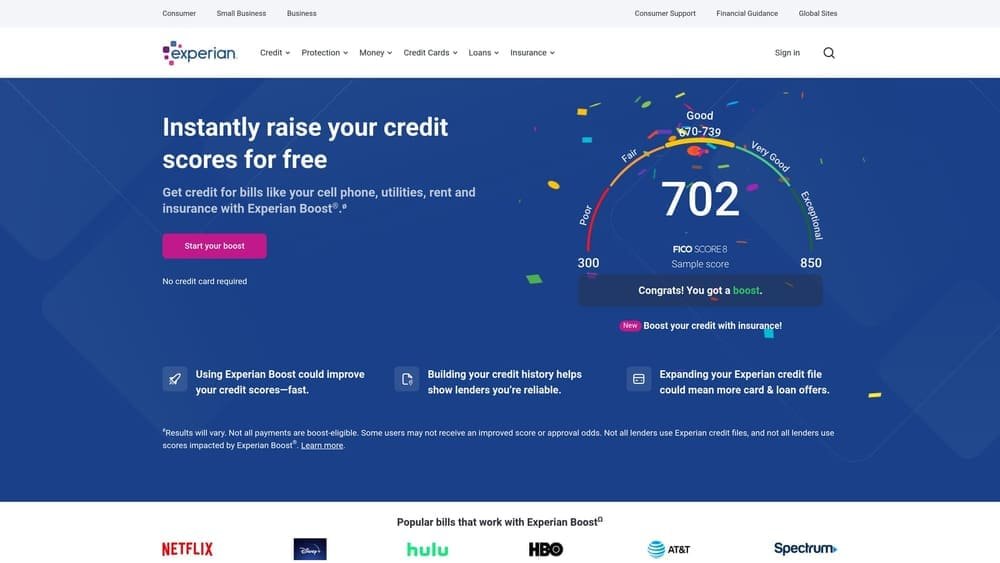
Experian Boost is a free Experian product that adds on-time utility, phone, and eligible streaming service payments to your Experian credit file, potentially improving your Experian-based FICO score.
Where This Tool Shines
If you have a thin credit file — meaning few open accounts and limited payment history — Experian Boost can add positive data points that wouldn’t otherwise appear on your credit report. For borrowers who pay their bills on time but haven’t had traditional credit accounts long enough to build strong history, this can provide meaningful movement on the Experian score specifically.
There is an important limitation to understand clearly: Experian Boost only affects your Experian score. It does not update your Equifax or TransUnion files. Since FHA lenders pull all three bureaus and use the middle score, Boost is most valuable when your Experian score is your weakest link. If your Experian score is already your highest of the three, the practical impact on your FHA qualification may be limited.
Key Features
Adds Non-Traditional Payment History: Utility bills, phone bills, and eligible streaming services can now count in your Experian file.
No Hard Credit Pull: Enrollment does not trigger a hard inquiry — your scores are not affected by signing up.
Immediate Score Impact: Score changes are reflected in your Experian file right away upon enrollment.
Completely Free: No subscription or fee of any kind to use Experian Boost.
Experian Only: Does not affect Equifax or TransUnion scores — a critical limitation for FHA applicants who need all three bureaus considered.
Best For
Borrowers with thin credit files or limited payment history on traditional accounts. Most useful when Experian is your lowest bureau score. Less impactful if Experian is already your strongest score of the three.
Pricing
Free. No subscription required. Experian does offer paid products alongside Boost, but the Boost feature itself carries no cost.
3. Self Credit Builder Account
Best for: Borrowers who need to build payment history and credit mix simultaneously while also saving money.
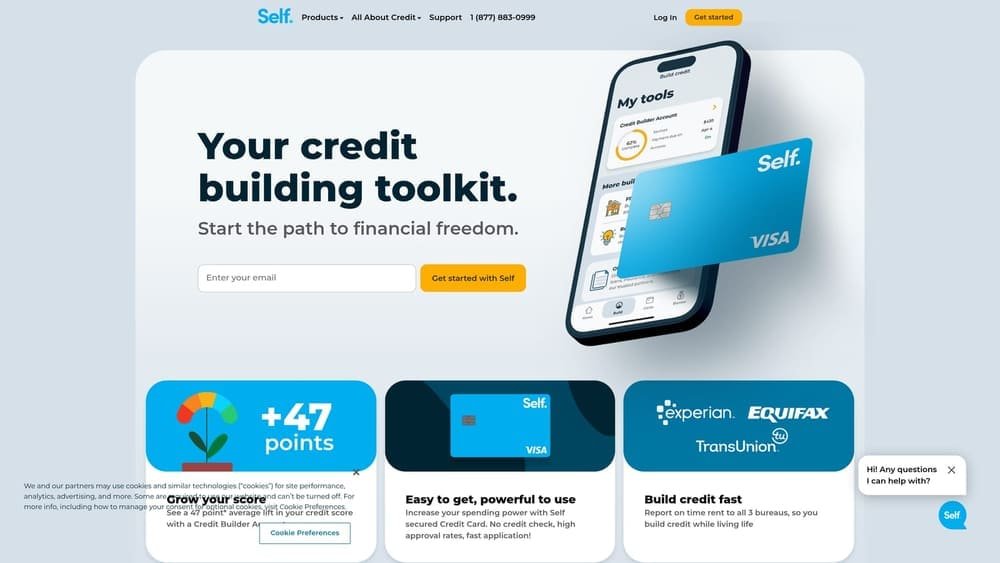
Self offers a credit-builder loan product that helps borrowers establish or rebuild payment history by making monthly payments into a locked savings account, with funds returned at term end.
Where This Tool Shines
Payment history is the single largest factor in your FICO score, accounting for 35% of the total calculation. If your file is thin or has gaps in payment history, a Self Credit Builder Account creates a structured, consistent record of on-time payments that reports to all three major bureaus: Equifax, Experian, and TransUnion. That tri-bureau reporting is what makes it particularly valuable for FHA applicants.
Self also adds an installment account to your credit mix, which matters because FICO rewards borrowers who can demonstrate responsible management of different types of credit. If you currently only have revolving accounts (like credit cards), adding an installment account through Self can improve your credit mix score factor. The savings component is a genuine bonus: at term end, you receive the funds you’ve been paying in, minus fees and interest.
Key Features
Tri-Bureau Reporting: Payments report to Equifax, Experian, and TransUnion — all three bureaus your FHA lender will review.
No Hard Credit Pull: Opening a Self account does not trigger a hard inquiry on your credit report.
Builds Payment History and Credit Mix: Addresses the two most impactful FICO score factors simultaneously.
Savings Return at Term End: You receive your accumulated payments back at the end of the term, minus a small admin fee and interest charges — net savings will be less than total payments made.
Multiple Plan Sizes: Different monthly payment tiers are available to fit your budget — verify current plan options and pricing directly at self.inc before applying.
Best For
Borrowers with no credit history or very thin files who need to establish a consistent payment record across all three bureaus. Also useful for borrowers rebuilding after past derogatory marks who want a structured, low-risk way to demonstrate current responsible behavior.
Pricing
Monthly payments vary by plan. A small admin fee applies, and interest is charged on the loan. Verify current plan pricing at self.inc before enrolling, as plans and fees are subject to change.
4. Kikoff
Best for: Borrowers who want to improve credit utilization ratio and credit mix with a low-cost revolving account.
Kikoff is a credit-building platform offering a small revolving credit line that reports to all three major bureaus, designed specifically to help borrowers improve their credit utilization ratio and credit mix.

Where This Tool Shines
Credit utilization — how much of your available revolving credit you’re using — is the second-largest factor in your FICO score. Kikoff opens a small revolving credit line in your name and reports it to Equifax, Experian, and TransUnion. By keeping utilization on this account low (ideally under 10%), you can positively influence your utilization ratio across your overall credit profile.
Kikoff is designed exclusively for credit building, not general spending. Think of it as a tool, not a wallet. The credit line amount is intentionally small, which keeps the risk low and the focus clear: demonstrate responsible revolving credit management, get it reported to all three bureaus, and let the score impact accumulate over time. No hard pull is required to open the account, which means you can add it to your credit-building strategy without triggering an inquiry that temporarily dips your score.
Key Features
Tri-Bureau Reporting: Reports to Equifax, Experian, and TransUnion — all three bureaus relevant to your FHA application.
No Hard Credit Pull: Opening a Kikoff account does not result in a hard inquiry on your credit file.
Revolving Account for Utilization: Adds a revolving credit line to your profile, directly addressing the utilization ratio factor in your FICO score.
Credit Mix Improvement: If you currently only have installment accounts, Kikoff adds revolving account diversity to your credit profile.
Credit-Building Purpose Only: Not designed as a functional spending account — the small credit line is intentional and keeps the tool focused on score improvement.
Best For
Borrowers who have no revolving accounts, or who need to improve their credit utilization ratio. Particularly useful when combined with Self (which adds an installment account), creating both account types for improved credit mix. Verify current pricing and availability at kikoff.com before enrolling.
Pricing
Low monthly fee model. Verify the current fee amount directly at kikoff.com before enrolling, as pricing is subject to change.
5. CFPB Credit Reports and Scores Resource Center
Best for: Borrowers who want to understand what FHA lenders actually see — and why their app score may differ from their mortgage score.
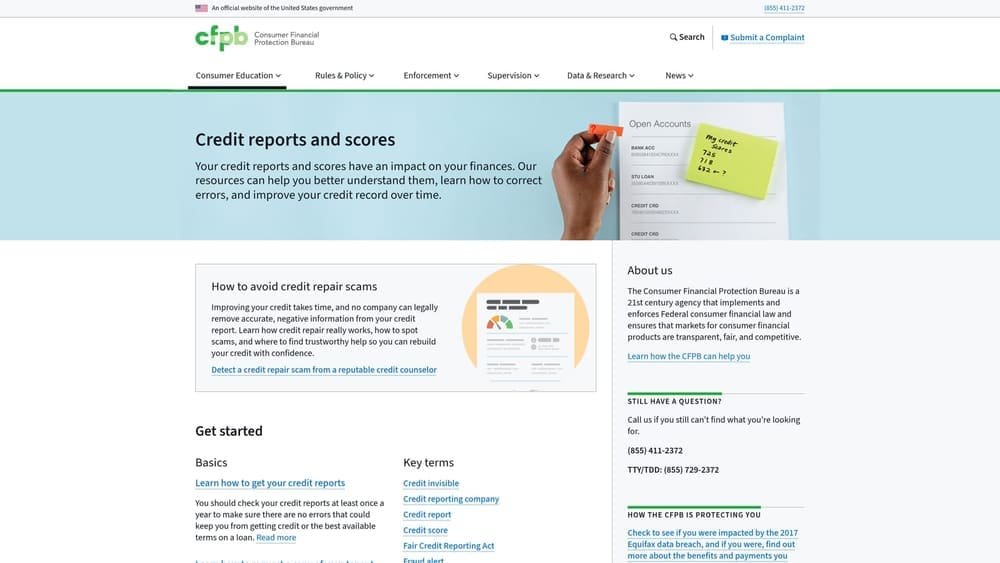
The CFPB Credit Reports and Scores Resource Center is the Consumer Financial Protection Bureau’s free, government-backed educational hub covering credit scores, dispute rights, and what mortgage lenders actually evaluate.
Where This Tool Shines
Here’s a frustrating reality many FHA applicants discover too late: the score you see in your banking app or on a free credit monitoring service is almost certainly not the score your FHA lender will use. Most consumer apps display VantageScore or FICO 8. FHA lenders use older, mortgage-specific FICO models: FICO Model 2 from Experian, FICO Model 4 from TransUnion, and FICO Model 5 from Equifax. These models can produce meaningfully different numbers from what you’re used to seeing.
The CFPB’s resource center explains this distinction clearly, without any product upsells or hidden agenda. It also provides step-by-step dispute guidance for all three bureaus, covers your rights under the FCRA, and helps you understand exactly what factors mortgage lenders weight most heavily. For borrowers who feel confused by conflicting score numbers across different platforms, this resource cuts through the noise with authoritative, unbiased information.
Key Features
Mortgage Score vs. Consumer Score Explanation: Clarifies the difference between FICO 8 and VantageScore (shown by most apps) and the FICO models 2, 4, and 5 that FHA lenders actually use.
Step-by-Step Dispute Guidance: Covers the dispute process for all three bureaus, including your rights to free submissions under the FCRA.
No Account Required: Fully accessible without creating a profile or providing any personal information.
Zero Product Upsells: Government-backed content with no commercial interest — purely educational and consumer-protective.
FCRA Rights Coverage: Explains what lenders can and cannot do with your credit information, including your rights to dispute inaccurate data.
Best For
Every FHA applicant, but especially those who are confused about why their score varies across platforms, or who have discovered errors on their reports and need clear guidance on how to dispute them effectively. This is the knowledge foundation that makes every other tool on this list more effective.
Pricing
Free. Government resource with no subscription, no account, and no fees of any kind.
6. Rocket Mortgage
Best for: Borrowers who want to track mortgage readiness alongside credit progress in a single digital platform.
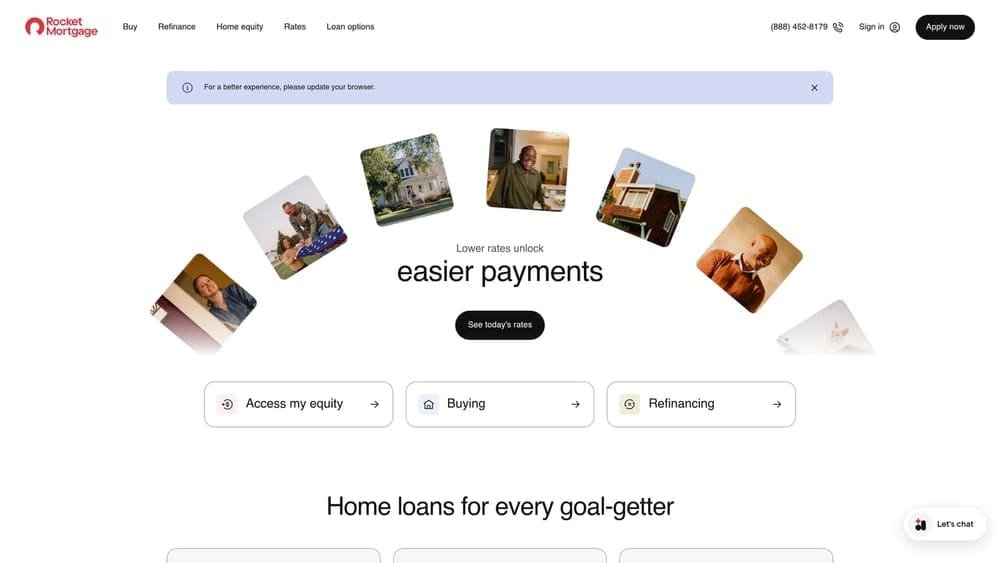
Rocket Mortgage is a national mortgage lender offering credit monitoring features integrated into their mortgage application pathway, allowing borrowers to track score progress in the context of loan readiness.
Where This Tool Shines
Rocket’s value in a credit-improvement context is the integration of credit tracking with mortgage readiness indicators. Rather than monitoring your score in isolation, their platform frames your credit progress in terms of loan qualification, which can help you understand which improvements will have the most practical impact on your FHA application. Their online dashboard is well-designed and accessible, which makes it easy to stay engaged with your progress over time.
That said, there are important limitations to understand. Rocket is a direct lender, not a broker, which means they offer their own loan products with their own overlays and guidelines. For borrowers with borderline credit scores or complex files, a broker with access to hundreds of wholesale lenders can often find approval pathways that a single-shelf lender cannot. Verify current credit monitoring features and soft-pull options directly at rocketmortgage.com before proceeding, as product offerings change.
Key Features
Credit Monitoring Integrated with Mortgage Flow: Score tracking is connected to their pre-qualification pathway, giving context to your credit progress.
Online Readiness Dashboard: Tracks multiple qualification factors alongside credit score in a single interface.
FHA Loan Products Available: Rocket offers FHA loan products as part of their product lineup.
Hard Pull for Full Pre-Approval: A full pre-approval requires a hard credit inquiry — verify whether soft-pull pre-qualification options are currently available at rocketmortgage.com.
Single-Lender Limitation: As a direct lender, Rocket’s guidelines are fixed — less flexibility than a mortgage broker on borderline FHA credit files.
Best For
Borrowers who are comfortable with a fully digital experience and want to track mortgage readiness alongside credit progress. Best suited for borrowers with stronger credit profiles. Those with scores near the 580 threshold or complex credit situations will benefit from broker comparison before committing to a single lender’s guidelines.
Pricing
No fee for credit monitoring tools — verify current availability at rocketmortgage.com. Mortgage fees vary by loan type, rate, and terms.
7. Movement Mortgage
Best for: Borrowers who prefer branch-level guidance and a lender known for an upfront underwriting model.
Movement Mortgage is a national mortgage lender known for an upfront underwriting model and community-focused lending, with FHA loan products and branch-level guidance for borrowers working toward qualification.
Where This Tool Shines
Movement’s differentiator in the mortgage space is their upfront underwriting approach, which moves the underwriting process earlier in the application timeline than many lenders. For borrowers who want to understand their actual qualification status sooner, rather than waiting until deep into the process, this model can reduce uncertainty. Their branch-level loan officers can provide personalized guidance on credit thresholds and qualification requirements specific to their FHA products.
As with Rocket, it’s important to understand Movement’s position as a direct lender. Their FHA guidelines are their own, and overlays apply. A broker working across multiple wholesale lenders can compare Movement’s terms against dozens of other options, which is particularly valuable for borrowers with scores in the 580–619 range where lender overlays vary significantly. Verify current FHA programs, credit guidance tools, and pre-approval processes directly at movement.com before applying.
Key Features
Upfront Underwriting Model: Moves underwriting earlier in the process, providing borrowers with clearer qualification signals sooner.
Branch-Level Loan Officer Access: In-person or branch guidance available for borrowers who want human support alongside digital tools.
FHA Loan Products: FHA financing is part of Movement’s product lineup — verify current program details at movement.com.
Hard Pull for Pre-Approval: Full pre-approval requires a hard credit inquiry — verify current process details at movement.com before proceeding.
Direct Lender Guidelines: Fixed overlays as a direct lender — broker comparison recommended for borrowers with borderline credit or complex files.
Best For
Borrowers who value branch-level human guidance and want a lender with a structured upfront underwriting process. Those with scores near the FHA minimums or with non-standard credit situations should compare a broker’s access to multiple wholesale lenders against Movement’s specific overlay requirements before committing.
Pricing
No standalone credit tool fee. Mortgage fees vary by loan type and location — verify current pricing and terms at movement.com.
Which Tool Is Right for Your FHA Timeline?
The right combination of tools depends on where your credit stands today and how much runway you have before you want to apply.
Start here, no matter what: Pull all three bureau reports at AnnualCreditReport.com and read the CFPB’s mortgage score guide. These two steps cost nothing and give you the complete picture of what FHA lenders will actually see.
If you have a thin credit file: Self Credit Builder Account and Kikoff work well together — Self adds an installment account and payment history across all three bureaus, while Kikoff adds a revolving account for utilization and credit mix. Both report tri-bureau and require no hard pull to open.
If Experian is your weakest bureau score: Add Experian Boost to your strategy. It’s free and immediate, though remember it only affects your Experian file.
If you’re comparing lenders: Rocket Mortgage and Movement Mortgage are both legitimate national lenders with FHA products and digital tools worth exploring. But here’s the broker advantage you shouldn’t overlook: both are direct lenders with fixed guidelines. When your score is near 580, lender overlays matter enormously. A broker with access to hundreds of wholesale lenders can shop your file across multiple options simultaneously, finding the lender whose overlay policy fits your specific profile.
That’s exactly what Duane Buziak at Coast2Coast Mortgage LLC does. As a broker, not a banker, Duane uses a NoTouch Credit Pull (soft pull, no hard inquiry) to assess your FHA readiness without dinging your score. He also has access to Rapid Rescore, a broker-exclusive tool that can update your bureau files quickly after you pay down debt or resolve errors — potentially accelerating your timeline to qualification. And with the Dare to Compare pricing challenge, you can see how broker access to wholesale pricing stacks up against what retail lenders are offering.
Coast2Coast also offers no-out-of-pocket closing options for qualified borrowers, which can make the path to FHA homeownership more accessible without compromising on rate or terms. Before you apply anywhere, it’s worth a conversation. Schedule your free consultation today and get a broker-advantage FHA pre-approval review from an award-winning team licensed in FL, GA, KY, MD, NC, SC, TN, TX, VA, WV, and DC.






4 Responses