
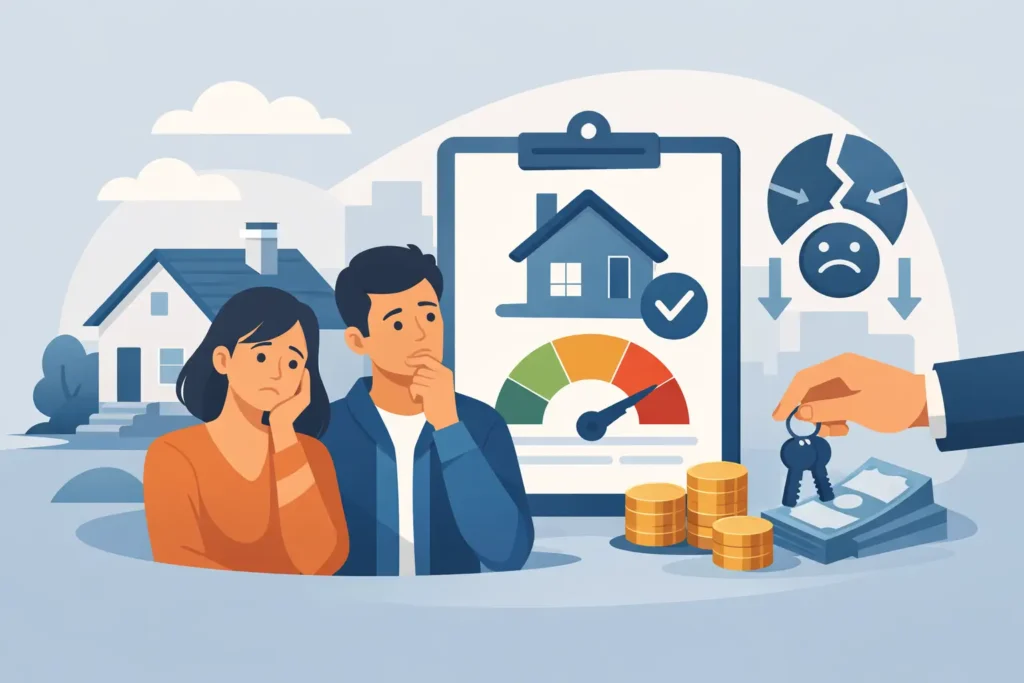

Bad credit does not automatically put homeownership out of reach. For many buyers, fha loans for first time home buyers with bad credit offer one of the most realistic paths to getting approved with a low down payment and more flexible guidelines than many conventional options. The key is knowing what FHA actually allows, what lenders still scrutinize, and how to present your file the right way from the start.
If you are buying your first home, this matters because credit is only one piece of the approval decision. Income, payment history, debt levels, cash to close, and the story behind past credit problems all play a role. That is why some borrowers with lower scores get approved while others with better scores still hit roadblocks.
How FHA loans for first-time home buyers with bad credit work
An FHA loan is a government-backed mortgage insured by the Federal Housing Administration. It is designed to expand access to home financing, especially for buyers who may not fit the tighter credit box of conventional lending. That does not mean approval is automatic. It means lenders have more room to work with borrowers who have had credit setbacks but have re-established stability.
For first-time buyers, the biggest advantage is usually the lower down payment requirement compared with other loan types. FHA also tends to be more forgiving when a borrower has limited savings, past collections, or a credit score that falls short of what many conventional lenders prefer.
Still, there is a difference between FHA guidelines and lender overlays. FHA may allow a certain scenario, but an individual lender may impose stricter standards. This is where borrowers often get confused. They hear that FHA is flexible, apply with one lender, get declined, and assume the loan program is off the table. In reality, the issue may be that the loan was not structured properly or the lender was not a good fit for that credit profile.
What credit score do you need?
This is the question most first-time buyers ask first, and the honest answer is that it depends on the full file. FHA is known for allowing lower credit scores than many conventional programs, but your score affects more than simple eligibility. It can influence your down payment requirement, interest rate, lender options, and how much documentation you will need to provide.
A lower score by itself does not kill a deal. What lenders want to understand is whether the credit problem is old, isolated, and explainable, or whether it signals an ongoing pattern. A buyer who had medical collections two years ago but now pays everything on time is a very different borrower than someone with recent late payments, maxed-out cards, and new collection accounts.
That distinction matters. FHA loans are built for borrowers who need a second chance, not for borrowers who are still actively sliding backward.
What lenders really look at beyond the score
Credit score gets attention, but underwriting goes deeper. If you want a realistic view of your approval odds, focus on the entire profile.
Payment history carries a lot of weight. Recent late payments on rent, car loans, credit cards, or student loans can raise concerns even if the score itself is technically within range. Lenders want signs that housing payments will be handled consistently.
Debt-to-income ratio matters too. A buyer with bruised credit but manageable monthly debts may be easier to approve than someone with a higher score and too many fixed obligations. FHA can allow higher ratios in some cases, but the rest of the file has to support it.
Cash reserves and funds for closing also help. You do not need perfect finances, but showing that you have enough for your down payment, closing costs, and some cushion after closing can strengthen the file.
Employment and income stability are another major factor. If your income is reliable and well documented, that can offset some concern about past credit issues. If your income is inconsistent, the loan may require more explanation and tighter review.
The credit issues that can still cause problems
Not all bad credit is viewed the same way. Some issues are easier to work around than others.
Older collections, paid or unpaid depending on the situation, may be manageable. High credit card balances can often be improved with a payoff strategy. Isolated late payments from a temporary hardship may be explainable.
More serious problems usually involve recent major derogatory events. A recent bankruptcy, foreclosure, charge-off pattern, or federal debt issue can trigger waiting periods or documentation hurdles. Judgments and delinquent federal obligations can also create complications that need to be resolved before closing.
This is why fast, accurate pre-approval matters. You do not want to guess. You want to know whether the issue is a temporary delay, a fixable file problem, or something that requires a longer credit recovery plan.
How to improve your approval odds quickly
If you are trying to buy soon, the goal is not to make your credit perfect. The goal is to make your file mortgage-ready.
Start by reviewing your credit reports for errors. Inaccurate late payments, duplicate accounts, or incorrect balances can drag scores down and create underwriting questions. Correcting mistakes can help more than people expect.
Next, focus on revolving debt. Paying down credit card balances can improve both your score and your debt-to-income profile. Even a modest balance reduction can make a real difference if your cards are heavily utilized.
Do not open new debt unless it is absolutely necessary. A new car loan, furniture financing, or fresh credit inquiry at the wrong time can weaken your file quickly. Mortgage approval rewards stability.
Make every payment on time from this point forward. If your history has been rough, recent clean payment behavior becomes even more important. Underwriters notice momentum.
Finally, get guidance before you make big moves. Paying off the wrong account first, closing old cards, or moving cash between accounts without documentation can create fresh problems. This is one area where hands-on mortgage advice saves time and frustration.
Down payment and costs: what first-time buyers should expect
One reason FHA stays popular with first-time buyers is that it allows low down payment financing for qualified borrowers. But low down payment does not mean no cash needed in every case.
You still need to plan for closing costs, prepaid items, and the possibility of repairs if the home does not meet appraisal standards. Depending on the transaction, some of those costs may be covered through seller concessions or assistance programs, but that depends on the market, the property, and how the offer is structured.
You also need to factor in FHA mortgage insurance. This is one of the trade-offs. FHA can make approval easier, but the monthly payment may include mortgage insurance costs that affect affordability. For some buyers, that trade-off is worth it because FHA gets them into a home sooner. For others, it makes more sense to use FHA now and plan to refinance later if credit improves.
Why pre-approval matters more when credit is shaky
If your credit is less than ideal, a casual online estimate is not enough. You need a real pre-approval review that looks at income, assets, liabilities, and credit details together.
That review can tell you whether you are ready now, what price range makes sense, and what needs to be fixed before you shop. It also helps prevent the worst-case scenario – finding a home, writing an offer, and discovering too late that the file cannot clear underwriting.
Strong pre-approval is also a confidence tool. First-time buyers with bad credit often assume they have no chance, or they swing the other way and overestimate what they can afford. A clear game plan replaces guesswork with facts.
For borrowers in more complex situations, working with an advisor-led mortgage team can make the process much smoother. A brokerage that understands FHA strategy, lender differences, and credit restoration can often spot solutions a generic call-center lender misses. FHA Mortgages is one example of the kind of hands-on support many first-time buyers look for when the file needs more attention than a standard loan application.
Is FHA the best option for every buyer with bad credit?
Not always. FHA is often the strongest fit, but not every borrower benefits from it equally.
If your credit improves enough and you have stronger reserves, a conventional loan could eventually offer lower long-term costs. If you qualify for specialized programs through state or local housing agencies, those may add down payment help that changes the picture. If the property type is unusual or the appraisal comes in with condition issues, FHA may become more complicated than another route.
That is why the best question is not, “Can I get an FHA loan?” It is, “What loan gives me the strongest chance to buy safely and affordably?” Sometimes the answer is FHA right now. Sometimes it is a short credit improvement plan that puts you in a better position 60 to 120 days from now.
Buying your first home with credit challenges can feel personal, but the mortgage process is more strategic than emotional. The right lender will look past the score alone, identify the path that actually works, and tell you the truth about what happens next. If your credit is not perfect but your goal is real, the next smart move is not waiting and worrying – it is getting your file reviewed and building a plan you can act on.