

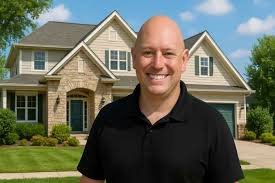
Current FHA mortgage rates are not a single published number. They are a range that moves daily with the market and shifts with your credit score, down payment, loan size, and the broker you use, so the only figure that applies to you is a personalized quote. National averages are useful as a reference point, not a budget. As of November 2026, the weekly Freddie Mac survey at freddiemac.com/pmms and the daily rate indexes from mortgage news publishers will give you the market’s direction, though neither is an FHA-specific price. Duane Buziak, a mortgage broker who specializes in FHA loans, explains below what sits behind a quoted rate, how mortgage insurance changes your real cost, what a rate difference is worth in dollars, how to compare offers without a hard inquiry, and the questions buyers ask most.
Where FHA Rates Stand Right Now and How to Read Them
Quick answer: FHA rates change every business day and are quoted per borrower, not set by HUD. For the market’s current level, check the dated Freddie Mac weekly release at freddiemac.com/pmms, then treat it as a benchmark only. Your FHA rate depends on your credit, down payment, loan amount, and lock terms, and appears on your Loan Estimate.
This article does not print a rate figure, because any number typed here would be stale within days. Pull the figure yourself from the dated source and note the “as of” date beside it. If the date is more than a week old, the number is already history.
Note rate versus APR
The note rate is the interest rate that determines your principal and interest payment. The APR folds in certain costs of borrowing, including FHA mortgage insurance, so an FHA APR runs above the note rate. The CFPB explains the difference in its guide to interest rate versus APR. A low note rate with heavy fees can cost more than a slightly higher rate with fewer fees, which is why the lowest rate does not always mean the lowest cost.
Published averages versus your Loan Estimate
Published averages are survey-based and cover mortgages broadly. They are not FHA-specific, and they assume a well-qualified borrower. The rate on a real Loan Estimate reflects your actual file on a specific day. Use averages to judge whether the market is rising or falling, and use a Loan Estimate to budget.
One misconception is worth clearing up: HUD does not set FHA interest rates. Lenders and the market do. HUD sets mortgage insurance premiums, loan limits, and underwriting standards.
What Moves Your FHA Rate: Credit Score Tiers, Down Payment, and Loan Size
FHA loans are insured by the federal government, but each loan is still priced by the investors who buy it. That pricing starts with mortgage-backed securities markets, where yields move daily. The Federal Reserve influences those yields indirectly through its policy decisions and signals, but mortgage rates do not move in lockstep with the Fed’s benchmark rate. A change in the market in the morning can reprice loans by the afternoon.
Your own profile then adjusts the price. HUD’s minimums are set out in HUD Handbook 4000.1, and individual lenders can layer stricter rules on top.
| Credit Score Tier | Minimum Down Payment (HUD) | Typical Rate Direction | Overlay Notes |
|---|---|---|---|
| 500-579 | 10% | Highest pricing | Many lenders will not go below 580; options are limited |
| 580-619 | 3.5% | Higher than average | Some lenders require 600 or 620 anyway |
| 620-679 | 3.5% | Moderate | Wider lender access; debt-to-income limits matter more |
| 680-739 | 3.5% | Lower | Few overlays; pricing improves with each tier |
| 740+ | 3.5% | Lowest pricing available | Strongest file; points and credits offer the most flexibility |
The table shows direction, not rates. Actual pricing depends on the day and the lender.
Lender overlays explain why quotes differ
An overlay is a lender’s own requirement above HUD’s floor, such as a 620 minimum score when HUD allows 580. The same borrower can be approved by one lender, declined by another, and priced differently by a third. A broker with access to hundreds of wholesale lenders can match your file to the investors whose overlays and pricing fit it, while a single-lender shelf offers only one set of rules.
Lock period, points, and credits
A rate lock holds your quoted rate for a set period, commonly 30 to 60 days, and longer locks usually cost more. You can also trade cost for rate: paying discount points lowers the rate, while accepting a lender credit raises it and offsets closing costs. Neither is better in the abstract. It depends on how long you will keep the loan, which is why comparing the full Loan Estimate matters more than comparing rates.
FHA Mortgage Insurance: The Cost Built Into Your Rate
Mortgage insurance is the main reason an FHA payment is higher than the note rate alone suggests. Every FHA borrower pays two kinds, with amounts set by HUD rather than by lenders. These figures are as of November 2026; confirm them in HUD’s Mortgagee Letters and Handbook 4000.1, Appendix 1.0.
| Premium | Amount | Applies To | Source |
|---|---|---|---|
| Upfront MIP (UFMIP) | 1.75% of base loan, flat | All FHA purchase loans; usually financed into the loan | HUD ML 2015-01 |
| Annual MIP | 0.55% | 30-year term, LTV over 95%, base loan at or under $726,200 | HUD ML 2023-05 |
| Annual MIP (full range) | 0.15% to 0.75% | Varies by term, LTV, and loan amount | Handbook 4000.1, App. 1.0 |
Do not round annual MIP to one “typical” number. The 0.55% tier applies only to the loan profile in the table, and a borrower with a larger down payment or shorter term can fall into a lower tier.
How long MIP lasts
For terms longer than 15 years, HUD’s rule depends on your down payment. With at least 10% down (an LTV of 90% or less), annual MIP drops off after 11 years. With less than 10% down, it lasts for the life of the loan. The tradeoff matters most to buyers putting 3.5% down, who should plan for a later refinance or payoff.
FHA loan limits for 2026
| 1-Unit Limit | Amount (2026) | Source |
|---|---|---|
| Floor (lower-cost areas) | $541,287 | HUD ML 2025-23 |
| Ceiling (high-cost areas) | $1,249,125 | HUD ML 2025-23 |
Limits are set by county. Use HUD’s FHA mortgage limits lookup for any county in Virginia, Florida, Tennessee, Georgia, Washington DC, North Carolina, South Carolina, or Maryland, and confirm the figure against HUD’s limits page before you shop.
Worked Example: Monthly Cost of an FHA Loan at a Sample Rate
This is an illustration, not a quote. Suppose you buy a $350,000 home in Henrico County, Virginia, with 3.5% down and a 30-year fixed FHA loan at an assumed 6.00% rate. The property tax uses Henrico’s rate of $0.85 per $100 of assessed value (henrico.us), with assessed value assumed equal to the price. Homeowners insurance is assumed at $1,500 per year.
- Down payment: $350,000 x 3.5% = $12,250
- Base loan: $350,000 – $12,250 = $337,750
- UFMIP financed: $337,750 x 1.75% = $5,910.63
- Total loan: $337,750 + $5,910.63 = $343,660.63
- Principal and interest at 6.00%, 30 years: $2,060.42
- Monthly MIP: $337,750 x 0.55% / 12 = $154.80 (first-year approximation; it declines as the balance falls)
- Property tax: $350,000 x $0.85 / $100 = $2,975 per year, or $247.92 per month
- Homeowners insurance: $1,500 / 12 = $125.00
Estimated total monthly payment: $2,588.14.
What a 0.25-point change is worth
Keep the same $343,660.63 loan and drop the rate to 5.75%. Principal and interest falls to $2,005.51, and the total payment becomes $2,533.23. That is $54.91 less per month, or roughly $19,800 over 30 years if you keep the loan that long. A quarter point is real money, but only when compared on identical terms, points, and fees.
Why FHA fits lower-credit or low-down-payment buyers
| Feature | FHA Loan | Conventional Loan (general) |
|---|---|---|
| Minimum down payment | 3.5% with a 580+ score; 10% at 500-579 | Commonly 3% to 5% at stronger credit |
| Typical credit floor | HUD floor of 500; most lenders start at 580 | Usually 620 or higher |
| Mortgage insurance pricing | Set by HUD tier, not by credit score | Priced by credit score and down payment |
| Fit | Built for limited down payment and rebuilding credit | Often favors higher scores and larger down payments |
Because FHA insurance is not priced by credit score, a borrower in the 580 to 680 range often finds the payment more predictable on FHA than on a program that charges more as the score drops.
Comparing FHA Rates Without a Hard Inquiry
Duane Buziak uses a NoTouch Credit Pull to review your FHA options through a soft pull mortgage process. It works as a mortgage pre-approval without a hard pull, so a no hard inquiry mortgage pre-approval lets you compare pricing without a dent in your score. A hard inquiry comes later, once you choose to proceed with a specific loan.
Broker versus single-lender channel
Duane Buziak is a broker, not a lender. That means he shops your file across hundreds of wholesale lenders and presents the pricing that fits. National companies such as Rocket Mortgage and Movement Mortgage originate through their own channels, so you see that company’s pricing and rules. Both models are legitimate. The difference is how many sets of pricing you see from one conversation.
Dare to Compare: lining up Loan Estimates
The Dare to Compare challenge is simple: bring any Loan Estimate you have and set it beside one from Duane Buziak. Use the CFPB’s Loan Estimate explainer and compare these items on the same day, for the same loan amount, lock period, and loan type:
- Interest rate and APR
- Discount points paid or lender credits received
- Upfront and annual MIP
- Origination and third-party fees
- Cash needed to close, including any no-out-of-pocket closing options
The CFPB’s rate-shopping guidance encourages comparing multiple offers. Credit scoring models generally treat multiple mortgage inquiries within a short window as a single inquiry, though the exact window varies by scoring model, so confirm the details with the CFPB. A soft pull avoids the question entirely during the comparison stage.
FHA Rate Questions Buyers Ask Most
Are FHA rates lower than conventional rates?
Often they are comparable or slightly lower for similar borrowers, but it varies by day and lender. FHA’s real difference is access: lower credit scores and smaller down payments. Compare APRs, since FHA mortgage insurance affects total cost. Your Loan Estimate is the only reliable comparison.
Can I get an FHA loan with a 580 credit score?
Yes. As of November 2026, HUD allows 3.5% down at a 580 score or higher, and 10% down at 500 to 579. Individual lenders may set higher minimums, so a broker with wide wholesale access can help find one whose overlays fit your file.
Does mortgage insurance raise my interest rate?
No, MIP is a separate charge, not part of the note rate. It does raise your APR and monthly payment. UFMIP is 1.75% of the base loan, and annual MIP depends on term, LTV, and loan amount, per HUD.
How often do FHA rates change?
Rates can change daily and sometimes more than once a day when markets move. Published weekly averages, such as Freddie Mac’s, smooth this out. A rate lock protects your quoted rate from further changes for the lock period.
Should I pay points on an FHA loan?
It depends on how long you will keep the loan. Points lower your rate for an upfront cost, and you must hold the loan long enough to recover that cost. If you may move or refinance soon, a lender credit can make more sense.
Can I refinance later with an FHA Streamline?
Yes, if you already have an FHA loan. The FHA Streamline Refinance has reduced documentation and requires a net tangible benefit, along with a payment history that meets HUD’s requirements. Check current rules at HUD.gov.
What is a rate lock, and how long does it last?
A rate lock guarantees your quoted rate and terms for a set period, commonly 30 to 60 days. Longer locks can cost more. Set the lock to cover your expected closing date with some cushion.
Does checking rates hurt my credit?
Not with a soft pull. A NoTouch Credit Pull does not create a hard inquiry. Hard inquiries for mortgage shopping within a short window are generally treated as one for scoring, according to the CFPB.
The FHA Rate That Matters Is the One Quoted to You
The market average tells you where rates are heading. Your Loan Estimate tells you what you will pay. Request a quote through a NoTouch Credit Pull, compare it against any other offer you hold, and judge it by APR, MIP, points, and cash to close, not by rate alone.
Ready to take the first step toward homeownership with an FHA loan tailored to your needs? Schedule your free consultation today and discover how the award-winning guidance of FHA Mortgages by Duane Buziak can help you navigate the path to your new home. As a broker with access to hundreds of wholesale lenders, Duane Buziak offers a NoTouch Credit Pull (soft pull, no hard inquiry), the Dare to Compare pricing challenge, and no-out-of-pocket closing options where they fit your file. Call 804-212-8663 or visit 4860 Cox Rd, Glen Allen, VA 23060. Duane Buziak, NMLS #1110647, serves buyers in VA, FL, TN, GA, DC, NC, SC, and MD.